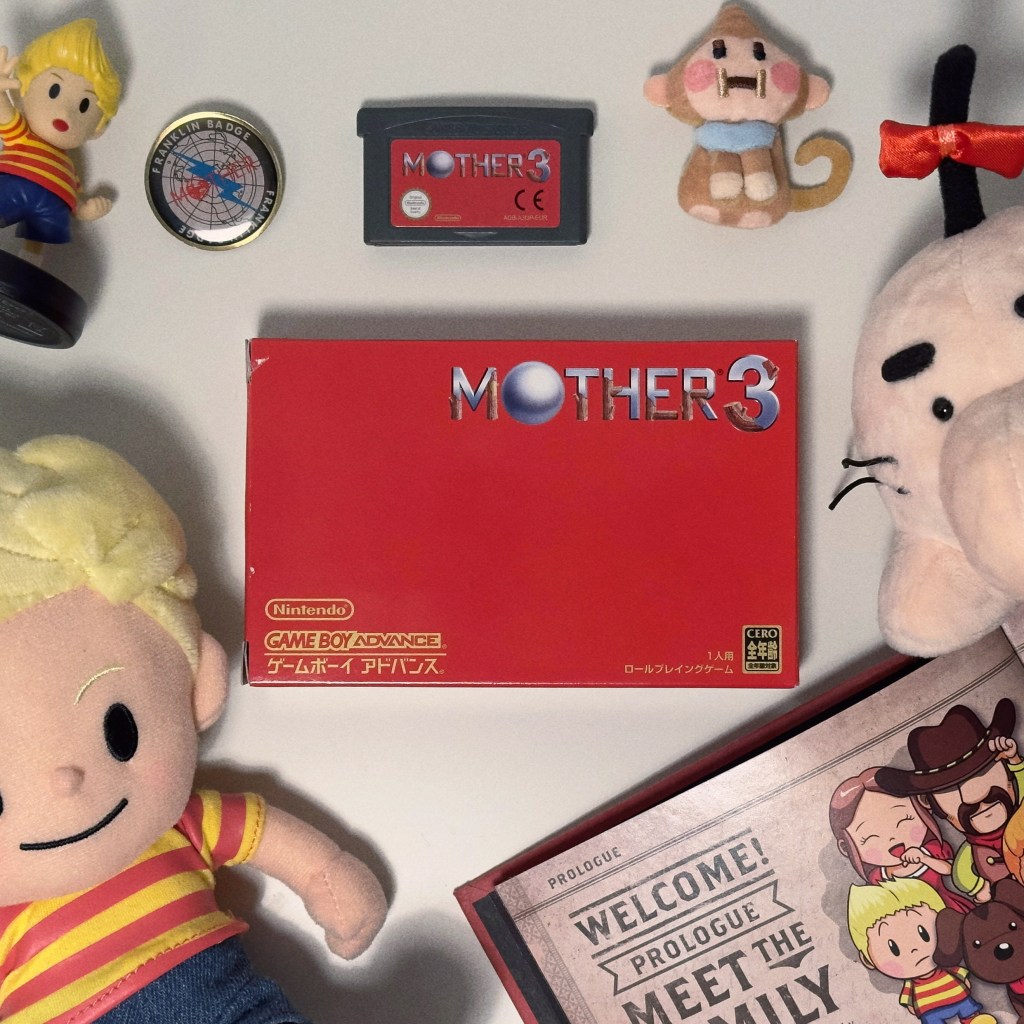

Perhaps the most notoriously well-known and requested of all unlocalised video games, Mother 3 is a fitting conclusion to Nintendo’s idiosyncratic series.
First announced for the N64, Mother 3 endured a troubled development cycle due to the ambitious nature of the project. Nintendo showcased a demo at Space World 1999 and it was included in the promotional material, along with other games that would eventually see retail release. But the game never made it to Space World 2000 as it was cancelled shortly before that. After a hiatus of a few years, development was restarted entirely for the GameBoy Advance and the finished game was released in Japan in 2006. Kept alive by unwavering support from hardcore fans, an unofficial translation of Mother 3 was completed and released by this dedicated community as early as 2008.

Comparisons between the N64 previews and the final GBA version show just how much series creator and writer, Shigesato Itoi, believed in his initial vision for this project. Even the logo has practically remained the same since its inception, as seen in the image above.
Mother 3’s priorities are evident from the outset – it wants to tell a story first, and uses the format of a rather simple video game RPG in order to do this. Ditching the open-ended and exploratory capacity of Earthbound (Mother 2), Mother 3 is split into 8 chapters and offers very little deviation away from the main story. I would normally consider this to be a bit of a negative, but Itoi’s strengths have always been in his memorable writing, which is easily the best thing about the game. It’s a cautionary and eco-friendly parable at its heart and an exploration of memory, onset by the most painful kind of grief.
Featuring a tragedy-stricken young family at the centre of the story, the main character, Lucas, is who we spend the most play-time with. It’s fascinating seeing his development, from being outcast as a ‘crybaby’ by the majority of the town, to becoming a resilient and determined young man with the most significant role in the story. All of the character sprites are beautifully animated and expressive; Lucas himself is a silent protagonist, but the subtle artwork flourishes work wonders in bringing him to life. Add to this a perfectly-timed score with an impressive range of instrumentation samples, considering the limitations of the hardware, and it’s impossible not to be captivated by the emotionally-affecting cutscenes throughout the 25+ hour runtime. Playing this nearly 20 years after release, it’s easy to appreciate with the benefit of hindsight that the level of care and attention given to the writing, graphics and music results in a wonderfully timeless presentation that few other games of this time period can claim.
In terms of the core gameplay, Mother 3 uses a party system of rotating characters who come and go throughout the various chapters. I would argue that this feature is crucial to the story it’s trying to tell, but it can be a little disorientating when trying to keep track of party XP, equipment and items. In the final few chapters, it does remain stable, however, with Lucas, Princess Kumatora, Duster the thief and trusted family dog, Boney, seeing us through to the climax of the story. The battle system is pretty standard turn-based fare, with one defining and innovative feature being the combo mechanic. Selecting a normal attack with any of the characters will grant you the opportunity to achieve up to a 16-hit combo in a rhythm-based assault. The beat of each attack is determined by the battle music, which is incredibly varied throughout the entire game, leading to a natural progression of increasing challenge. Eventually, with an increased pool of available PSI attacks, battles adopt a familiar pattern of buffs, debuffs, offensive attacks and healing, but the consistently quirky enemy variety keeps encounters fresh.
Overall, there’s not much I can find fault with in Mother 3. I would have preferred not to have been restricted to the autonomy of a chapter structure. I would have liked full control over a consistent party. And there were a few difficulty spikes where I had to slightly grind XP to overcome. Difficult development cycle aside, this is a very solid title and an experience that can only be fully realised in this medium.
The immediacy of the game industry means that many companies nowadays attempt to cash-in on the latest trend, whether that is Live Service games or endless Season Passes. And if it’s not trend-chasing, they’re trying to push new technological boundaries with the latest visual or performance enhancements, meaning that older games can often be lost to time or obscurity. Mother 3 was created with such heart and soul, given the patience and time it required, that it truly feels like an estranged relic from a bygone era. But it’s one that will be passionately kept alive by everyone who has experienced it.
9/10
 Critical 24/60